Comparison
Accord Hybrid vs Sonata Hybrid: Comfort Eligibility Decides It
Accord Hybrid unless the car is being flipped inside roughly 31,500 miles, the point where its lower running cost repays the Sonata Hybrid's discount.
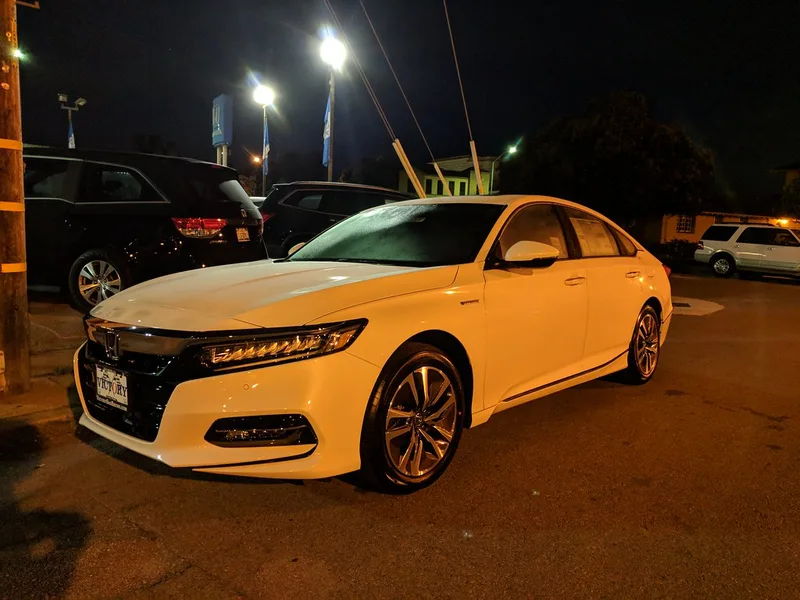
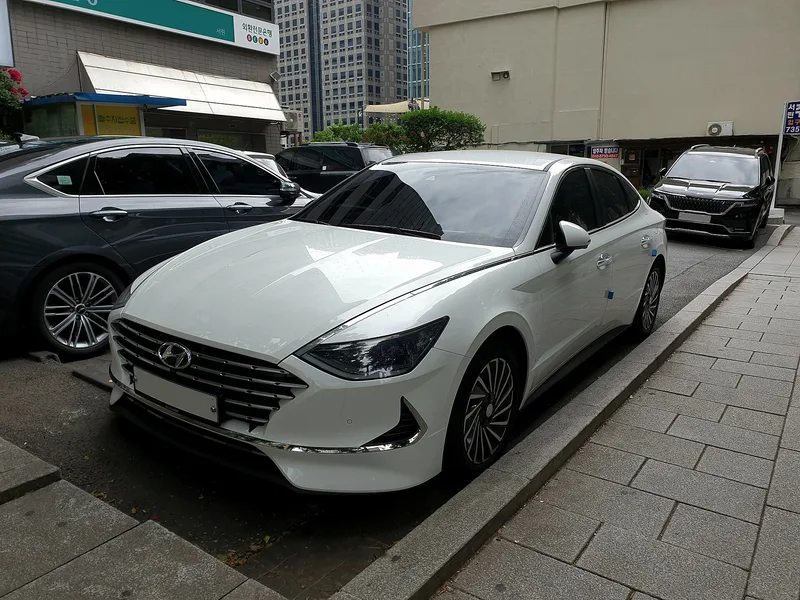

- Energy 8.5¢/mi
- Maintenance 2.7¢/mi
- Depreciation 11.4¢/mi
- Energy 8.7¢/mi
- Maintenance 3.1¢/mi
- Depreciation 13.9¢/mi
Energy, maintenance and depreciation only, at $4.08/gal. Insurance, registration and any car payment sit on top. Add yours in the cost per mile calculator.
| Spec | Honda Accord Hybrid | Hyundai Sonata Hybrid |
|---|---|---|
| Combined MPG | 48 | 47 |
| kWh / 100 mi | — | — |
| Used price range | $13,250–$20,100 | $12,280–$18,550 |
| Maintenance per year | $400 | $458 |
| Seats | 5 | 5 |
| Cargo (cu ft) | 16.7 | 16 |
| Rear legroom (in) | 40.4 | 34.8 |
| Uber X | Yes | Yes |
| Uber Comfort | Yes | No |
| Uber XL | No | No |
Honda Accord Hybrid sources: EPA fuel economy, maintenance estimates, used price guide, Uber vehicle requirements ; Hyundai Sonata Hybrid sources: EPA fuel economy, maintenance estimates, used price guide, Uber vehicle requirements . Updated 2026-08-27.
The short answer
Two mid-size hybrid sedans, rated within one mile per gallon of each other, and on the surface a coin toss. The numbers say otherwise. The Accord Hybrid runs at 22.6 cents a mile against the Sonata Hybrid’s 25.7, it is rated for Uber Comfort where the Sonata Hybrid is not, and it carries 5.6 more inches of rear legroom. The Sonata Hybrid’s answer is a lower price, and the whole comparison turns on how long the car is kept.
Cost per mile
The fuel figures are close enough to be almost irrelevant. The Accord Hybrid is rated at 48 mpg combined, the Sonata Hybrid at 47, which works out to 8.5 cents and 8.7 cents of gasoline a mile at $4.085 a gallon. Across a 30,000-mile year that is about 625 gallons against 638, or $2,553 against $2,607. A driver would have to look hard to feel the difference.
The rest of the ledger is not close. Maintenance runs 2.7 cents a mile for the Accord Hybrid against 3.1 for the Sonata Hybrid, and depreciation 11.4 cents against 13.9. Added up, the Accord Hybrid costs 22.6 cents a mile to run and the Sonata Hybrid 25.7, a gap of 3.1 cents that comes almost entirely from depreciation, with maintenance contributing 0.4 cents and fuel effectively nothing.
At 30,000 miles a year that is $6,783 against $7,707: a difference of $924 a year, of which $750 is depreciation alone and $120 is maintenance. The IRS standard mileage rate of 76 cents covers the Accord Hybrid’s real running cost 3.36 times over and the Sonata Hybrid’s 2.96 times.
One detail in the fuel numbers is worth pulling out, because it inverts for the right driver. The Sonata Hybrid is the better highway car of the two, rated 51 mpg on the highway against the Accord Hybrid’s 48, and the worse city car, at 45 against 48. Rideshare mileage skews toward stop-and-go, and that is why the combined figures land where they do. A driver whose work is mostly long airport runs on open road is buying a different mix than this site’s combined-rating model assumes, and for that driver the fuel gap closes and reverses.
Price
The Sonata Hybrid is the cheaper car to buy at both ends of its range. It trades between $12,280 and $18,550, against $13,250 to $20,100 for the Accord Hybrid. That is $970 less at the bottom of both ranges and $1,550 less at the top.
The spreads are similar, $6,270 for the Sonata Hybrid and $6,850 for the Accord Hybrid, so neither car offers the other’s buyer an unusual bargain at the low end. This is a straightforward discount rather than a structural difference in how the two depreciate.
Break-even
Buying both at the bottom of their ranges, the Sonata Hybrid’s $970 head start is repaid by the Accord Hybrid’s 3.1-cent-a-mile advantage in roughly 31,500 miles, or a little over a year of full-time driving.
Buying both at the top, the discount is larger and the crossing comes later: $1,550 divided by the same 3.1-cent gap lands at about 50,000 miles, closer to two years at full-time mileage.
Either way the crossing arrives inside a normal ownership period. That is the answer that matters. A driver keeping the car for one season may genuinely be better off with the Sonata Hybrid. A driver keeping it for the life of the car is not.
What Uber Comfort is worth
The Accord Hybrid is rated for Uber Comfort on Uber’s own eligibility listing. The Sonata Hybrid is rated for Uber X only.
This is the part of the comparison the per-mile numbers cannot price, and it deserves to be stated as a limitation rather than dressed up as a calculation. Comfort trips pay a higher fare than X trips, but how often they appear depends entirely on the market, the hour, and the local mix of riders, and this dataset tracks none of that. What can be said is the shape of it: the Accord Hybrid’s advantage is 3.1 cents a mile on cost and an entire fare tier on revenue, while the Sonata Hybrid’s advantage is a one-time discount of $970 to $1,550. One of those compounds with every mile driven and the other does not.
For a driver in a market where Comfort rarely surges, the tier is worth little and the comparison stays a cost comparison, which the Accord Hybrid still wins. For a driver in a market where it surges often, the gap is not close.
Space and comfort
Rear legroom is 40.4 inches in the Accord Hybrid against 34.8 in the Sonata Hybrid, a difference of 5.6 inches. No pair of sedans in this dataset is further apart in the back seat, and the number is not a specification-sheet abstraction: 40.4 inches is limousine territory for the middle of a mid-size sedan, and it is a large part of why the Accord Hybrid clears Comfort while the Sonata Hybrid does not.
Cargo is a wash, 16.7 cubic feet against 16.0, a difference of 0.7 cubic feet that no passenger will ever notice. Both cars seat five.
Which one to buy
The Accord Hybrid, for almost every driver. It runs 3.1 cents a mile cheaper, saves $924 a year at full-time mileage, clears a higher-paying fare tier, and gives back nearly half a foot of rear legroom, against a purchase price $970 to $1,550 higher.
The Sonata Hybrid’s case is real but narrow: it is the cheaper entry, its generation is the more recent of the two at 2020 through 2023, and it is the better car on the highway. A driver buying for a single season, driving mostly long open-road trips, in a market where Comfort never surges, is buying sensibly. Change any one of those three conditions and the Accord Hybrid is the better car.
Full breakdowns of both are in the Honda Accord Hybrid review and the Hyundai Sonata Hybrid review.