Comparison
Accord Hybrid vs Civic: Paying More for Less Car
The Accord Hybrid, unless a driver specifically wants the newer car and has decided that three or four model years are worth $1,398 a year plus $2,920 at purchase.
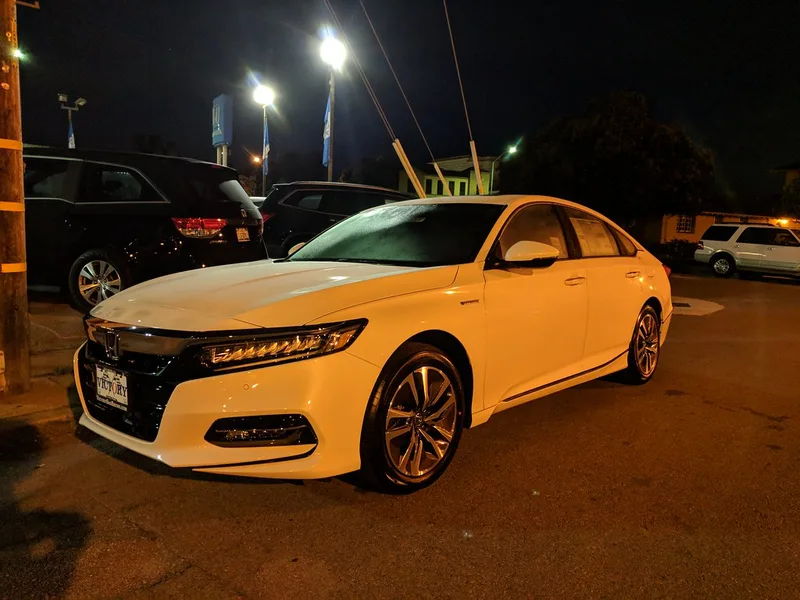
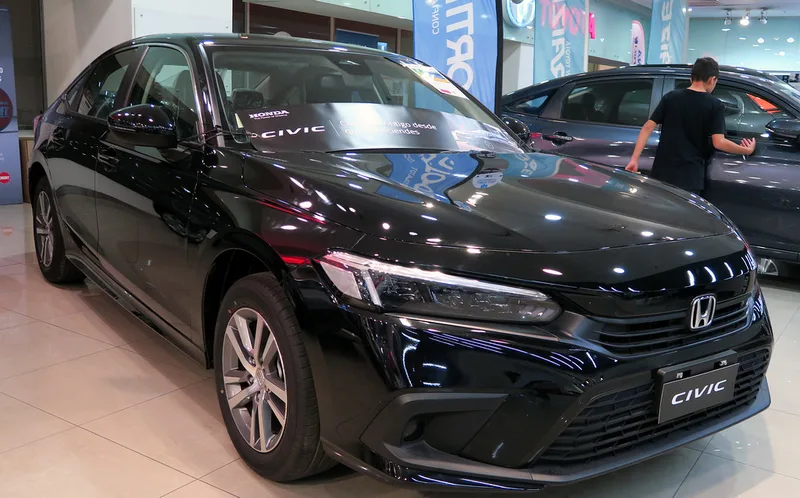
- Energy 8.5¢/mi
- Maintenance 2.7¢/mi
- Depreciation 11.4¢/mi
- Energy 11.7¢/mi
- Maintenance 2.5¢/mi
- Depreciation 13.1¢/mi
Energy, maintenance and depreciation only, at $4.08/gal. Insurance, registration and any car payment sit on top. Add yours in the cost per mile calculator.
| Spec | Honda Accord Hybrid | Honda Civic |
|---|---|---|
| Combined MPG | 48 | 35 |
| kWh / 100 mi | — | — |
| Used price range | $13,250–$20,100 | $16,170–$22,043 |
| Maintenance per year | $400 | $368 |
| Seats | 5 | 5 |
| Cargo (cu ft) | 16.7 | 14.8 |
| Rear legroom (in) | 40.4 | 37.4 |
| Uber X | Yes | Yes |
| Uber Comfort | Yes | No |
| Uber XL | No | No |
Honda Accord Hybrid sources: EPA fuel economy, maintenance estimates, used price guide, Uber vehicle requirements ; Honda Civic sources: EPA fuel economy, maintenance estimates, used price guide, Uber vehicle requirements . Updated 2026-08-27.
The short answer
On this site the usual shape of a comparison is a trade. One car is cheaper on the lot, the other is cheaper at the pump, and the useful work is finding the mileage where they swap places. These two do not trade. The Accord Hybrid is cheaper to buy at both ends of the market, cheaper to run by 4.7 cents a mile, roomier in the back seat than any vehicle in this dataset, and rated for a fare tier the Civic cannot reach.
What the Civic has is years. Its generation runs 2022 through 2025 against the Accord Hybrid’s 2018 through 2022, so at any asking price the Civic on the forecourt will be the younger car. That is worth something real, and this comparison is mostly an attempt to say how much.
Cost per mile
Fuel is where the gap opens. The Accord Hybrid is rated 48 mpg combined, the Civic 35. At $4.085 a gallon that is 8.5 cents of gasoline a mile against 11.7. Across a 30,000-mile year the Accord Hybrid burns about 625 gallons and the Civic about 857, a difference of 232 gallons, or $2,553 against $3,501.
The Civic’s rating splits unusually widely, 31 in the city against 40 on the highway. Rideshare and delivery work sits at the city end of that split, so a driver comparing these two on the highway figure alone is reading the wrong number for the job.
Maintenance is close enough to ignore: 2.7 cents a mile for the Accord Hybrid against 2.5 for the Civic, worth $60 a year. The published annual estimates agree, $400 against $368. This is the one line where the Civic’s lack of a hybrid system shows up, and it shows up small.
Depreciation goes the Accord Hybrid’s way, 11.4 cents a mile against 13.1, a difference of 1.7 cents worth $510 a year.
Totals: 22.6 cents a mile for the Accord Hybrid against 27.3 for the Civic. At full-time mileage that is $6,783 against $8,181, a difference of $1,398 a year. Measured against the IRS standard mileage rate of 76 cents, the Accord Hybrid’s real running cost is covered 3.36 times over and the Civic’s 2.79 times.
Price, at both ends
The Accord Hybrid trades between $13,250 and $20,100. The Civic trades between $16,170 and $22,043.
At the bottom of both ranges the Accord Hybrid is $2,920 cheaper. At the top it is $1,943 cheaper. There is no price point where the Civic is the cheaper purchase, and since it is also the more expensive car to operate, there is no mileage at which the accounts balance. The Accord Hybrid is ahead on the day of purchase and further ahead every month afterwards.
The bands themselves are similar in width, $6,850 against $5,873, so neither car offers its buyer an unusual bargain hiding at the low end.
What the model years are worth
This is the part that decides the comparison, because it is the only column the Civic wins.
Three to four model years separate the two generations. The Civic asks $2,920 more at the bottom of the market, and then $1,398 a year more to operate. Those are the two numbers being paid for the newer car, and the second one keeps arriving for as long as the car is kept.
Whether that is worth paying is not something this dataset can settle, because odometer readings and remaining service life are not in it. This site models cost per mile across a generation, not the condition of one particular car on one particular forecourt. Two cars from these two generations sitting at the same asking price will not have covered the same distance, and nothing in the per-mile figures speaks to that.
What the figures do give is the shape of the bill: a fixed sum on the day of purchase, and a recurring one every year after. A full-time driver adding 30,000 miles a year works through the newer car’s advantage in remaining life quickly while paying that $1,398 the whole time. Someone driving part time works through it slowly, and the Civic’s case gets correspondingly stronger.
The back seat, and the tier it unlocks
Rear legroom is 40.4 inches in the Accord Hybrid against 37.4 in the Civic. The Accord Hybrid’s figure is the largest of any vehicle on this site, ahead of both minivans in the set, which is not something a mid-size sedan usually manages.
That space is a large part of why the Accord Hybrid is rated for Uber Comfort as well as Uber X, while the Civic is rated for Uber X alone. Three of the twelve vehicles here clear Comfort, so the Civic is in the majority, but the majority is not where the better-paying trips are.
This site does not model what Comfort is worth, because the honest inputs are local: how often the tier surges in a given market, at what hours, and with what rider mix. The structural point stands without a number on it. Comfort eligibility is an advantage that applies to revenue on every qualifying trip, and it belongs to the car that is also cheaper to buy and cheaper to run.
Cargo is nearly level, 16.7 cubic feet against 14.8, a difference of 1.9 cubic feet. Both seat five.
Which one to buy
The Accord Hybrid, for any driver making the decision on the numbers. It is $2,920 cheaper at the bottom of the market, $1,398 a year cheaper to operate, three inches roomier in the back, and eligible for a fare tier the Civic is not.
The Civic is worth buying by someone who has looked at those figures and decided that a car three or four model years younger is worth $2,920 at the outset and $1,398 for every year they keep it. That is a defensible decision, particularly for a part-time driver who will not work through the newer car’s remaining life quickly. It is not a cheaper one, and nothing in this dataset makes it look like one.
Full breakdowns of both cars are in the Honda Accord Hybrid review and the Honda Civic review.