Comparison
Model 3 vs Camry Hybrid: The EV Saves Energy, Not Money
Camry Hybrid at the bottom of the market, where its $3,910 discount would take about 195,000 miles to repay. Model 3 at the top, where the discount is gone.
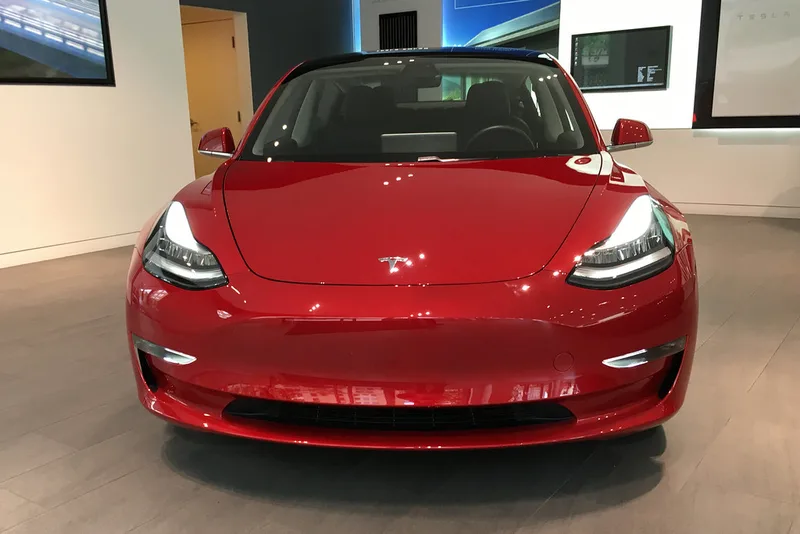
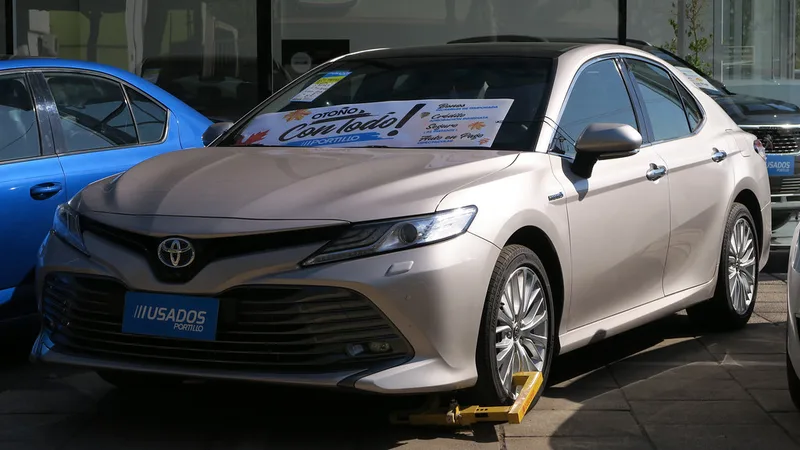
- Energy 4.3¢/mi
- Maintenance 2.4¢/mi
- Depreciation 14.0¢/mi
- Energy 7.9¢/mi
- Maintenance 2.9¢/mi
- Depreciation 12.0¢/mi
Energy, maintenance and depreciation only, at $4.08/gal and $0.18/kWh. Insurance, registration and any car payment sit on top. Add yours in the cost per mile calculator.
| Spec | Tesla Model 3 | Toyota Camry Hybrid |
|---|---|---|
| Combined MPG | — | 52 |
| kWh / 100 mi | 23.7 | — |
| Used price range | $17,200–$23,480 | $13,290–$24,100 |
| Maintenance per year | $358 | $442 |
| Seats | 5 | 5 |
| Cargo (cu ft) | 15 | 15.1 |
| Rear legroom (in) | 35.2 | 38 |
| Uber X | Yes | Yes |
| Uber Comfort | Yes | Yes |
| Uber XL | No | No |
Tesla Model 3 sources: EPA fuel economy, maintenance estimates, used price guide, Uber vehicle requirements ; Toyota Camry Hybrid sources: EPA fuel economy, maintenance estimates, used price guide, Uber vehicle requirements . Updated 2026-08-27.
The short answer
This is the comparison where the electric car’s headline advantage is real, large, and almost entirely cancelled by something else. The Model 3 costs 4.3 cents a mile in electricity against the Camry Hybrid’s 7.9 cents in gasoline, a 3.5-cent gap that works out to $1,053 a year at full-time mileage. It also depreciates 2 cents a mile faster. Net of everything, the Model 3 runs at 20.7 cents a mile against 22.8, an advantage of just 2 cents, and it costs $3,910 more to get into at the bottom of the market.
Cost per mile
Energy first, because it is the line most drivers compare and the one the Model 3 wins decisively. At 23.7 kWh per 100 miles and $0.1834 per kilowatt-hour, the residential electricity price this site uses everywhere, the Model 3 spends about 4.3 cents a mile moving. The Camry Hybrid, rated 52 mpg combined at $4.085 a gallon, spends 7.9 cents. Over 30,000 miles that is $1,304 against $2,357.
Maintenance is closer than the usual electric-versus-combustion framing suggests: 2.4 cents a mile for the Model 3 against 2.9 for the Camry Hybrid, worth 0.5 cents. The published annual figures tell the same story, $358 against $442.
Depreciation reverses the picture. The Model 3 loses 14 cents a mile against the Camry Hybrid’s 12, a 2-cent difference that eats more than half of the energy advantage on its own. Scaled to a year that is $4,200 against $3,600.
Add the three together and the Model 3 costs 20.7 cents a mile against the Camry Hybrid’s 22.8. The difference is 2 cents a mile, or $603 a year at 30,000 miles. Against the IRS standard mileage rate of 76 cents, the Model 3’s running cost is covered 3.66 times over and the Camry Hybrid’s 3.34 times.
The lesson is the one this site keeps arriving at from different directions: for a car bought used and driven hard, what happens on the lot matters more than what happens at the pump or the charger.
Price, and why it settles the question
The Model 3 trades between $17,200 and $23,480. The Camry Hybrid trades between $13,290 and $24,100. Those ranges overlap almost completely, but they are shaped differently, and the shape is the whole story.
At the bottom of both ranges the Camry Hybrid is $3,910 cheaper. At 2 cents a mile of savings, the Model 3 needs about 195,000 miles to repay that difference. A full-time driver covering 30,000 miles a year would need more than six years, on a car already several years old when bought. That is not a break-even; that is a car reaching the end of its working life before the arithmetic turns.
At the top of both ranges the picture inverts. The Camry Hybrid’s spread is $10,810, the widest of any sedan in this dataset, and its ceiling of $24,100 sits $620 above the Model 3’s $23,480. Buying at the top of both markets, the Model 3 is cheaper to buy and cheaper to run, and there is nothing to calculate.
So the answer depends entirely on where in the market the buying happens. Few comparisons on this site split that cleanly, and this one deserves to be read carefully before shopping. A driver hunting the cheapest usable car will find a Camry Hybrid well below anything the Model 3 offers. A driver shopping the top of the range, for the newest and lowest-mileage example, should buy the Model 3.
Charging is a cost the per-mile figure does not carry
The 4.3-cent energy figure assumes electricity at the residential rate, which means charging at home overnight. A driver without home charging pays public rates that run well above residential, and the Model 3’s energy advantage narrows or disappears entirely.
Time is the other uncounted cost. A gasoline car refuels in five minutes at any hour; an electric car on a road shift either charges at a fast charger during working time or stops working while it charges. This site does not model that downtime as a dollar figure, because the honest inputs for it are local: charger availability, wait times, and what an hour of driving earns in a given market. The guide to EV charging downtime works through how to price it for a specific situation.
The short version: this comparison’s 2-cent advantage assumes a driver who charges at home and never queues. Remove either assumption and the Model 3’s edge is gone.
Space, comfort and tier
Both cars are rated for Uber X and Uber Comfort on Uber’s eligibility listing, and neither clears Uber XL. Neither car can pull rank on the other at the fare screen, and that is unusual enough on this site to make the comparison a purer cost question than most.
Cargo is effectively identical, 15 cubic feet in the Model 3 against 15.1 in the Camry Hybrid. Rear legroom favors the Camry Hybrid, 38 inches against 35.2, a difference of 2.8 inches that a rider in the middle seat would notice on a long trip. For two cars both carrying Comfort ratings, the Camry Hybrid is the more comfortable one to ride in the back of.
Which one to buy
If the budget is at the low end, the Camry Hybrid. Its $3,910 discount is worth more than six years of the Model 3’s running-cost advantage, and no realistic ownership period closes that gap.
If the budget is at the high end, the Model 3. It costs less to buy there, less to run, and less to maintain.
And if there is no home charging, the Camry Hybrid regardless of budget. The Model 3’s entire case rests on 4.3-cent electricity, and that number belongs to a driver with a wall socket and a night to spare.
Full breakdowns are in the Tesla Model 3 review and the Toyota Camry Hybrid review.