Comparison
Prius vs Corolla Hybrid: Same 52 MPG, Six Cents Apart
The Prius, in every scenario this dataset can model. The only question is whether it wins on day one or after about 32,000 miles.
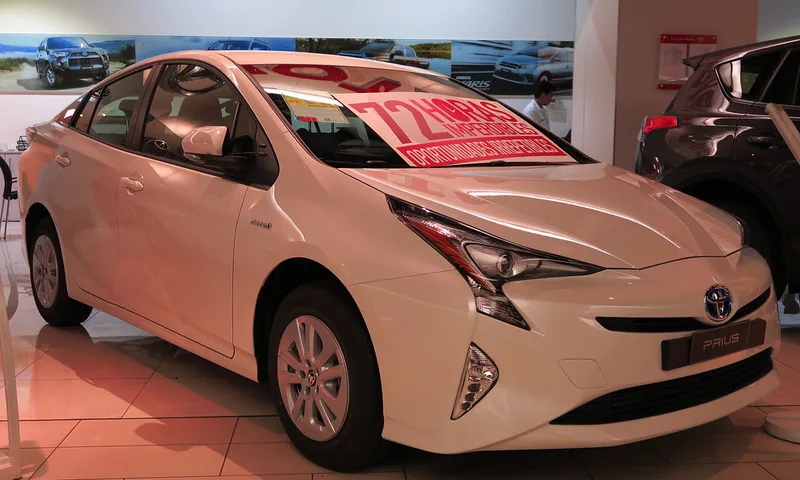
- Energy 7.9¢/mi
- Maintenance 2.7¢/mi
- Depreciation 9.8¢/mi
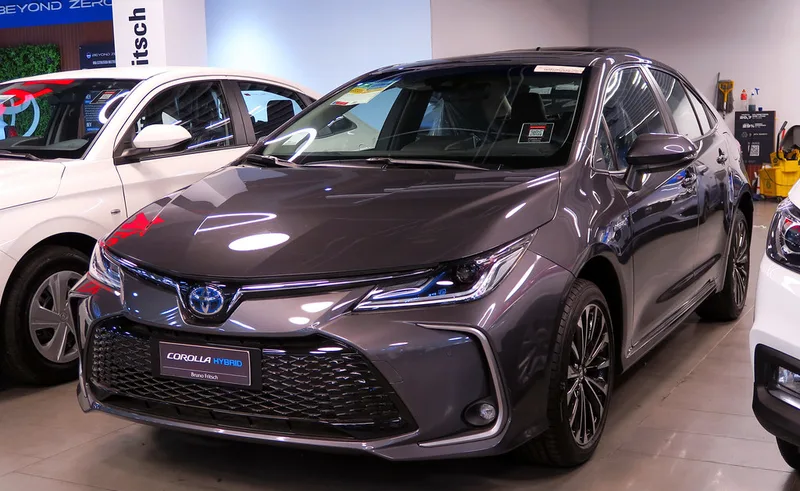
- Energy 7.9¢/mi
- Maintenance 2.4¢/mi
- Depreciation 16.2¢/mi
Energy, maintenance and depreciation only, at $4.08/gal. Insurance, registration and any car payment sit on top. Add yours in the cost per mile calculator.
| Spec | Toyota Prius | Toyota Corolla Hybrid |
|---|---|---|
| Combined MPG | 52 | 52 |
| kWh / 100 mi | — | — |
| Used price range | $11,360–$20,150 | $13,360–$18,210 |
| Maintenance per year | $408 | $362 |
| Seats | 5 | 5 |
| Cargo (cu ft) | 27.4 | 13.1 |
| Rear legroom (in) | 33.4 | 34.8 |
| Uber X | Yes | Yes |
| Uber Comfort | No | No |
| Uber XL | No | No |
Toyota Prius sources: EPA fuel economy, maintenance estimates, used price guide, Uber vehicle requirements ; Toyota Corolla Hybrid sources: EPA fuel economy, maintenance estimates, used price guide, Uber vehicle requirements . Updated 2026-08-27.
The short answer
These two cars carry the same combined fuel economy rating, 52 mpg, which means the comparison most buyers reach for first tells them nothing. At the fuel price this site uses everywhere, $4.085 a gallon, both burn about 7.9 cents of gasoline in a mile and both go through roughly 577 gallons across a 30,000-mile year. That is the whole of their similarity. On total cost the Prius runs at 20.4 cents a mile against the Corolla Hybrid’s 26.5, a 6.1-cent gap, and every bit of it comes from depreciation rather than from the pump.
Cost per mile
Broken into the three lines this site models for every car, the two look like this. Fuel is identical at 7.9 cents. Maintenance slightly favors the Corolla Hybrid, 2.4 cents against the Prius’s 2.7, worth 0.3 cents a mile. Depreciation is where the comparison is decided: 9.8 cents a mile for the Prius against 16.2 for the Corolla Hybrid, a 6.4-cent difference that swamps the maintenance edge more than twenty times over.
Scaled to a full-time driver’s 30,000 miles a year, the Prius costs about $6,107 to run and the Corolla Hybrid about $7,937. The $1,830 difference is roughly what a driver would spend on four months of fuel in either car. Both clear the current IRS standard mileage rate of 76 cents comfortably, but not equally: the rate covers the Prius’s real running cost 3.73 times over and the Corolla Hybrid’s 2.87 times.
The published maintenance figures point the other way and are worth naming, because they answer a different question. RepairPal puts the Corolla Hybrid at $362 a year and the Prius at $408, and on those numbers the Corolla Hybrid looks like the cheaper car to keep. Both figures assume a private owner’s mileage. Scaled to 30,000 miles the same rates come to about $720 and $810 a year, and the $90 difference disappears inside a depreciation gap of $1,920 a year.
Why the depreciation gap is this wide
The Prius trades between $11,360 and $20,150 used, a spread of $8,790. The Corolla Hybrid trades between $13,360 and $18,210, a spread of $4,850. The narrower band is the tell. A car whose used price varies by less than five thousand dollars across its whole generation has already given up most of its depreciation to its first owner, but it has also given up the chance to be bought cheaply. The Prius’s wider band means the bottom of its range sits $2,000 below the bottom of the Corolla Hybrid’s, and buying there is precisely what drives the per-mile figure down.
This is the part of the comparison a driver actually controls. Fuel economy is fixed by the engineering; the price paid on the lot is not.
Break-even
Two scenarios, because the answer differs by where in each range the buying happens.
Buying at the bottom of both ranges, the Prius is cheaper twice over: $2,000 less to buy and 6.1 cents a mile cheaper to run. There is no crossing point to calculate. The Prius is ahead from the first mile and pulls further ahead with every one after it.
Buying at the top of both ranges, the Corolla Hybrid is $1,940 cheaper, at $18,210 against $20,150. At a 6.1-cent-a-mile advantage the Prius repays that difference in about 32,000 miles. That is roughly one year of full-time driving, and well under two for a part-time driver. Past that point the Prius is ahead again, and stays ahead.
So the Corolla Hybrid’s window is one year at most, and only for a driver who buys at the top of the market and sells inside twelve months.
Space and body style
The Corolla Hybrid takes back some ground in the cabin, though less than the body styles suggest. Rear legroom is 34.8 inches against the Prius’s 33.4, a 1.4-inch edge that a back-seat passenger would notice on a long ride and not on a short one.
Cargo is the reverse, and the gap is not close: 27.4 cubic feet in the Prius against 13.1 in the Corolla Hybrid, a difference of 14.3 cubic feet. That is a hatchback against a sedan trunk, and for a driver taking airport runs it decides which trips are workable. Two large suitcases and a pair of carry-ons fit behind the Prius’s rear seats without folding anything; the Corolla Hybrid’s trunk is a two-bag proposition before the passengers’ knees start negotiating.
Both cars seat five and both are rated for Uber X only. Neither qualifies for Uber Comfort or Uber XL on Uber’s own eligibility listing, so the higher-paying tiers are shut to both of them and the choice stays a cost question.
Which one to buy
The Prius, on every measure this dataset can model. It costs 6.1 cents a mile less to run, $1,830 a year less at full-time mileage, it can be bought $2,000 cheaper at the bottom of the market, and it carries more than twice the cargo. The Corolla Hybrid answers with 1.4 inches of rear legroom and $90 a year on the published maintenance estimate.
There is one argument left for the Corolla Hybrid, and it sits outside what this site measures. Its generation runs 2020 through 2022 against the Prius’s 2016 through 2022, so at any given asking price the Corolla Hybrid on the lot will have covered fewer miles. This dataset models cost, not odometer readings, and a car that has covered far fewer miles is worth something the per-mile figure does not capture. That is a real argument. It is not a $1,830-a-year argument.
Full breakdowns of both cars are in the Toyota Prius review and the Toyota Corolla Hybrid review.