Guide
Hybrid or Electric for Uber? Where the EV Stops Being Cheaper
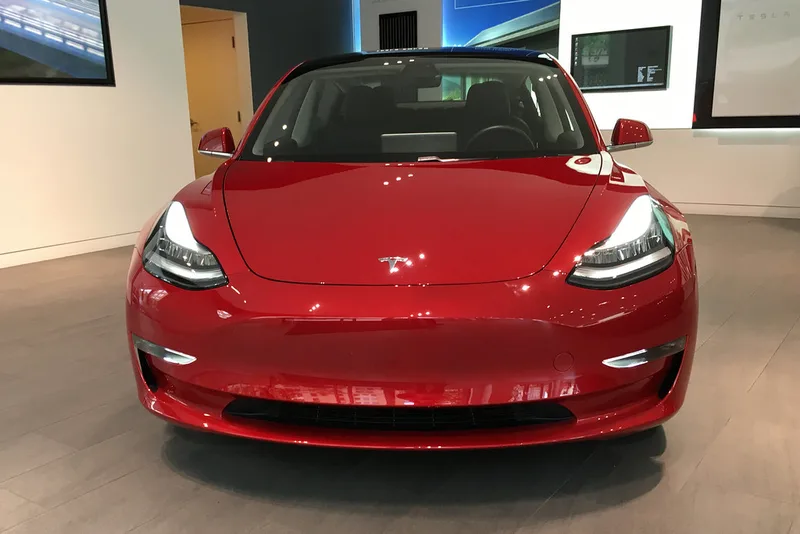
Two electric cars, two different answers
This site tracks two electric cars, the Chevrolet Bolt EV and the Tesla Model 3, and eight hybrids. Ask which is cheaper to drive for Uber and you get a split answer. The Bolt EV is the cheapest car on the whole site, at 18.0 cents a mile. The Model 3 comes in third, at 20.7 cents, just behind the Prius at 20.4.
That second result surprises people, because the Model 3 is the most efficient car on the site. It needs 23.7 kilowatt-hours to go 100 miles, which works out to 4.3 cents of electricity a mile against 7.9 cents of gas for a Prius. So where does the advantage go?
Where the money goes, line by line
Every car on this site is priced on three lines: energy, maintenance and depreciation. Here they are for the two EVs and the three hybrids they usually get compared with.
| Vehicle | Energy | Maintenance | Depreciation | Total per mile |
|---|---|---|---|---|
| Bolt EV | 5.2c | 1.8c | 11.0c | 18.0c |
| Prius | 7.9c | 2.7c | 9.8c | 20.4c |
| Model 3 | 4.3c | 2.4c | 14.0c | 20.7c |
| Accord Hybrid | 8.5c | 2.7c | 11.4c | 22.6c |
| Camry Hybrid | 7.9c | 2.9c | 12.0c | 22.8c |
Both EVs win on energy and on maintenance. The difference is the last column. The Bolt loses value at 11.0 cents a mile, only a little faster than the Prius. The Model 3 loses 14.0 cents a mile, the fastest of these five.
Put in dollars over a 30,000-mile year, the Model 3 against the Prius looks like this: it saves $1,053 on energy and $90 on maintenance, then gives back $1,260 in extra depreciation. Net, it costs $117 a year more to run. That’s with electricity at the home rate this site uses everywhere, 18.3 cents a kilowatt-hour.
The price of electricity decides it
That home rate is the assumption doing the most work in this comparison. It comes from the U.S. Energy Information Administration’s residential series, and it’s roughly what you pay if you charge in your own garage. Public fast charging is priced by each network on its own terms, often well above that (the charging downtime guide goes into what this site does and doesn’t know about it).
This site doesn’t have a reliable figure for public charging, so rather than guess one, here is the electricity price at which each EV costs exactly the same per mile as each hybrid. Pay less than the number and the EV is cheaper. Pay more and the hybrid is.
| Electric car | vs Prius | vs Accord Hybrid | vs Camry Hybrid |
|---|---|---|---|
| Bolt EV | 26.9c per kWh | 34.9c per kWh | 35.4c per kWh |
| Model 3 | 16.7c per kWh | 26.2c per kWh | 26.8c per kWh |
The Model 3’s number against the Prius, 16.7 cents, is below the home rate. That’s the $117 from above. To run a Model 3 cheaper than a Prius you’d need electricity under 16.7 cents, which is cheaper than the average home rate, so a cheap off-peak plan at home is about the only way there.
The Bolt has more room. It stays ahead of the Prius up to 26.9 cents a kilowatt-hour, and ahead of the Camry Hybrid up to 35.4 cents.
To use these, look up what your usual charger actually charges. Networks bill either per kilowatt-hour or, in some states, per minute. If yours bills by the minute, divide what a typical session costs by the kilowatt-hours it delivered to get a number you can compare.
Why anyone picks the Model 3 anyway
Uber Comfort. Of the twelve cars on this site, only three qualify for it: the Model 3, the Accord Hybrid and the Camry Hybrid. The Bolt and the Prius are Uber X only.
If Comfort is the plan, the Prius isn’t really an option, so the fair comparison is the Model 3 against the other two Comfort cars. There it does fine. It’s 20.7 cents a mile against 22.6 for the Accord Hybrid and 22.8 for the Camry Hybrid, and it keeps that lead until electricity reaches about 26 or 27 cents a kilowatt-hour. The Model 3 vs Camry Hybrid comparison goes through that pairing in detail.
What they cost to buy
Running cost is only half of it. At the bottom of the used price range this site tracks, the Bolt EV starts at $8,587, which is $2,773 less than a Prius at $11,360. So the Bolt is cheaper to buy as well as cheaper to run, as long as the charging works out.
The Model 3 starts at $17,200, which is $5,840 more than a Prius. Against the other Comfort cars the gap is smaller: the Accord Hybrid starts at $13,250 and the Camry Hybrid at $13,290.
The cost that isn’t in any of these numbers
None of the figures above count the time spent charging. Filling a hybrid takes a few minutes. The government’s fuel economy site says that “even a ‘fast charge’ to 80% capacity can take 30 min.” Do that once a shift, five shifts a week, and it adds up to about 125 hours over a 50-week year. Whatever you earn an hour, that’s the number to multiply it by.
A driver who charges overnight at home barely notices any of this. A driver without a home charger pays for it every day, in time, and in the higher public rate on top.
How to decide
With a charger at home, the Bolt EV is the cheapest way to drive Uber X on this site, about 2.4 cents a mile under a Prius. For Comfort, the Model 3 comes out cheapest of the three cars that qualify.
Without one, it comes down to what public charging costs where you live, so check that against the table above. Past about 27 cents a kilowatt-hour, a Prius for Uber X or an Accord or Camry Hybrid for Comfort is the cheaper car, and there are no charging stops to plan around.