Comparison
Niro vs Corolla Hybrid: The Thriftier Car Costs More to Run
The Niro, at any point in either price range. Its fuel disadvantage is worth $144 a year and its depreciation advantage $810.
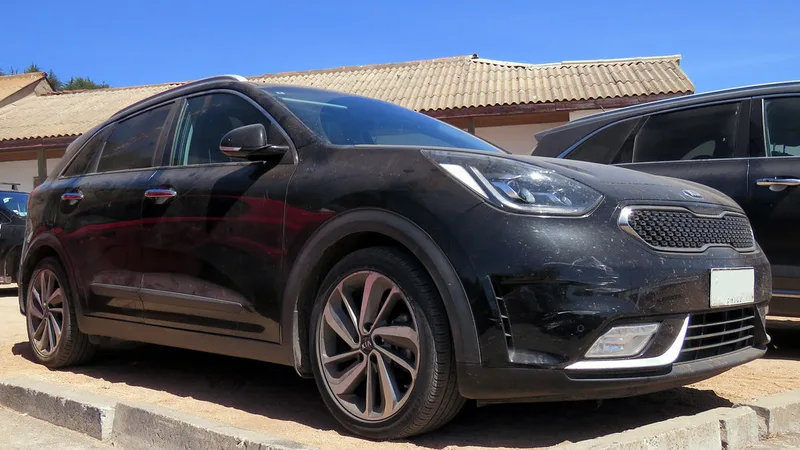
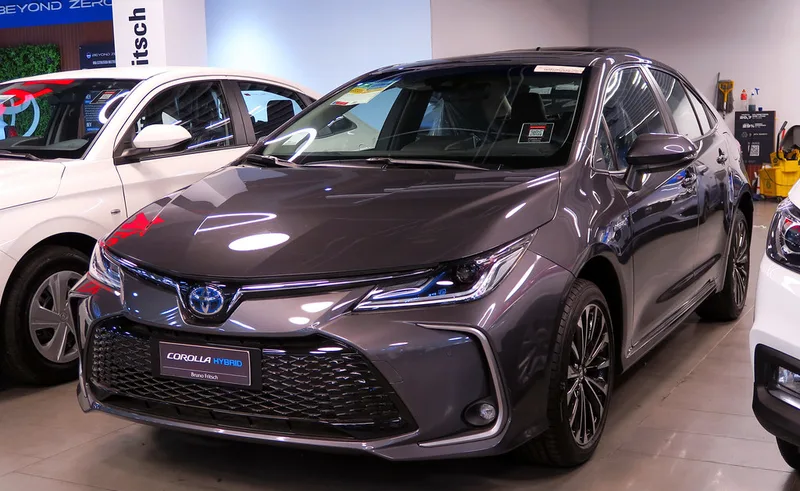
- Energy 8.3¢/mi
- Maintenance 2.5¢/mi
- Depreciation 13.5¢/mi
- Energy 7.9¢/mi
- Maintenance 2.4¢/mi
- Depreciation 16.2¢/mi
Energy, maintenance and depreciation only, at $4.08/gal. Insurance, registration and any car payment sit on top. Add yours in the cost per mile calculator.
| Spec | Kia Niro | Toyota Corolla Hybrid |
|---|---|---|
| Combined MPG | 49 | 52 |
| kWh / 100 mi | — | — |
| Used price range | $8,093–$18,239 | $13,360–$18,210 |
| Maintenance per year | $377 | $362 |
| Seats | 5 | 5 |
| Cargo (cu ft) | 22.4 | 13.1 |
| Rear legroom (in) | 37.4 | 34.8 |
| Uber X | Yes | Yes |
| Uber Comfort | No | No |
| Uber XL | No | No |
Kia Niro sources: EPA fuel economy, maintenance estimates, used price guide, Uber vehicle requirements ; Toyota Corolla Hybrid sources: EPA fuel economy, maintenance estimates, used price guide, Uber vehicle requirements . Updated 2026-08-27.
The short answer
The Corolla Hybrid is the more efficient car and the more expensive one to run. It is rated 52 mpg combined against the Niro’s 49, which saves it 0.5 cents a mile at the pump, and it gives all of that back three times over in depreciation. Total cost lands at 26.5 cents a mile for the Corolla Hybrid against 24.3 for the Niro. Add a price floor more than five thousand dollars lower and the comparison stops being close.
Cost per mile
Fuel is the only line the Corolla Hybrid wins. At $4.085 a gallon its 52 mpg rating works out to 7.9 cents a mile, against 8.3 cents for the Niro at 49 mpg. Across a 30,000-mile year that is 577 gallons against 612, or $2,357 against $2,501. The Corolla Hybrid saves $144 a year on gasoline.
Maintenance is a rounding error between them, 2.4 cents a mile against 2.5, or $720 a year against $750. The published annual estimates sit equally close, $362 for the Corolla Hybrid and $377 for the Niro.
Depreciation decides everything. The Corolla Hybrid loses 16.2 cents a mile against the Niro’s 13.5, a gap of 2.7 cents, or $810 a year at full-time mileage. Set that against the $144 the Corolla Hybrid saves on fuel and the direction of the whole comparison reverses.
Totals: 24.3 cents a mile for the Niro against 26.5 for the Corolla Hybrid, a 2.1-cent gap worth $636 a year. Annual running cost comes to about $7,301 against $7,937. The IRS standard mileage rate of 76 cents covers the Niro’s real cost 3.12 times over and the Corolla Hybrid’s 2.87 times.
There is a general point buried here that applies well beyond these two cars. Fuel economy is the number printed on the window sticker and argued about in forums, and on this dataset it is worth 0.5 cents a mile between two hybrids. Depreciation is printed nowhere and discussed rarely, and it is worth 2.7. A driver optimizing the visible number is optimizing the smaller one.
Price
The Niro trades between $8,093 and $18,239. The Corolla Hybrid trades between $13,360 and $18,210.
The ceilings sit within $29 of each other, as close to identical as two cars in this dataset come. The floors are not close at all: the Niro can be bought $5,267 below the cheapest Corolla Hybrid, and $8,093 is the lowest entry price of any vehicle on this site.
That difference in shape comes from the spreads. The Niro’s range is $10,146 wide, the Corolla Hybrid’s only $4,850. A narrow spread means the car has already surrendered most of its depreciation to a previous owner, which sounds like a virtue and is not one for this buyer: it also means there is no cheap example to find. The Niro’s wide spread is what makes its bottom end reachable.
Break-even
Buying at the bottom of both ranges there is nothing to calculate. The Niro is $5,267 cheaper to buy and 2.1 cents a mile cheaper to run. It wins on the first mile and every mile after.
Buying at the top of both ranges the Corolla Hybrid is $29 cheaper, and at a 2.1-cent-a-mile disadvantage it hands that back in about 1,400 miles. That is under a week of full-time driving. A $29 difference between two cars in this price class is noise, not a discount.
So there is no version of this comparison where the Corolla Hybrid’s purchase price buys it a meaningful head start.
Space and body style
The Niro is the bigger car in the ways that matter for paid driving. Cargo is 22.4 cubic feet against 13.1, a difference of 9.3 cubic feet: a crossover’s load bay against a sedan trunk. Rear legroom is 37.4 inches against 34.8, an edge of 2.6 inches.
For an airport run that is the difference between fitting a family’s luggage and starting a negotiation about what rides on a lap. For a delivery shift it is the difference between loading through a hatch and loading through a trunk opening.
Both cars seat five and both are rated for Uber X only. Neither clears Uber Comfort or Uber XL on Uber’s eligibility listing, so neither can reach the better-paying trips and the fare screen has no say in the choice.
Which one to buy
The Niro, on the numbers, at every price point either car occupies. It runs cheaper, it buys cheaper, it carries more, and it seats passengers more comfortably.
Put the Corolla Hybrid’s case as fairly as this dataset allows and it comes to two things: it burns less fuel, and its generation is the later of the two, running 2020 through 2022 against the Niro’s 2017 through 2022. Both are true. Neither is worth $636 a year, and the first of them is worth something this site does not model at all: a buyer comparing two cars at the same price will find a lower-mileage Corolla Hybrid, and odometer readings are not in this dataset.
That is the honest gap in the comparison. Within what is modelled, the Niro wins and it is not close.
Full breakdowns are in the Kia Niro review and the Toyota Corolla Hybrid review.