Comparison
Prius vs Civic: Hybrid Against Gas, With No Crossing Point
The Prius on cost, without qualification. The Civic is worth its $2,075 a year only to a driver who needs the back seat and the newer car more than the money.
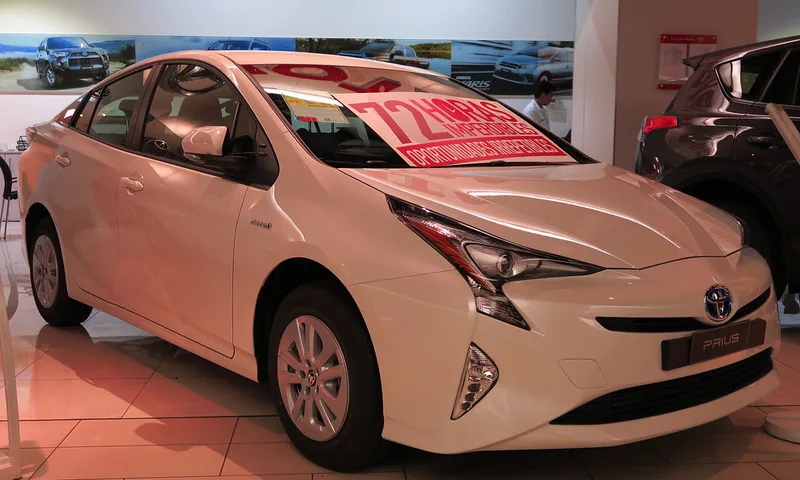
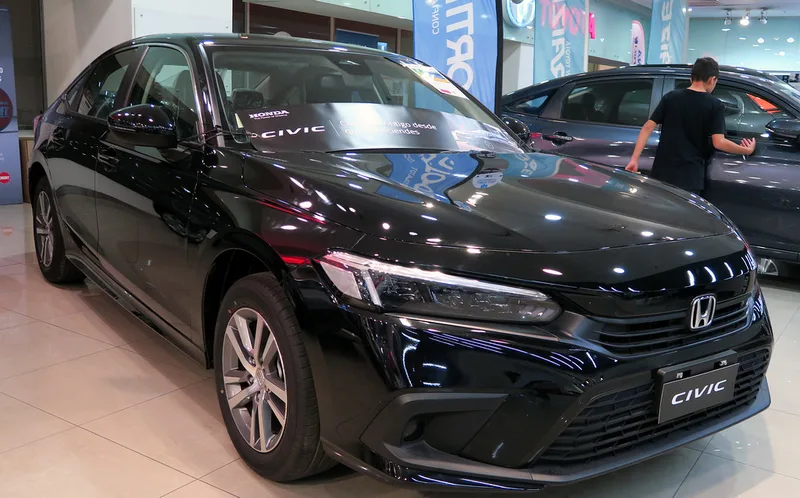
- Energy 7.9¢/mi
- Maintenance 2.7¢/mi
- Depreciation 9.8¢/mi
- Energy 11.7¢/mi
- Maintenance 2.5¢/mi
- Depreciation 13.1¢/mi
Energy, maintenance and depreciation only, at $4.08/gal. Insurance, registration and any car payment sit on top. Add yours in the cost per mile calculator.
| Spec | Toyota Prius | Honda Civic |
|---|---|---|
| Combined MPG | 52 | 35 |
| kWh / 100 mi | — | — |
| Used price range | $11,360–$20,150 | $16,170–$22,043 |
| Maintenance per year | $408 | $368 |
| Seats | 5 | 5 |
| Cargo (cu ft) | 27.4 | 14.8 |
| Rear legroom (in) | 33.4 | 37.4 |
| Uber X | Yes | Yes |
| Uber Comfort | No | No |
| Uber XL | No | No |
Toyota Prius sources: EPA fuel economy, maintenance estimates, used price guide, Uber vehicle requirements ; Honda Civic sources: EPA fuel economy, maintenance estimates, used price guide, Uber vehicle requirements . Updated 2026-08-27.
The short answer
Most comparisons on this site come down to a trade: one car is cheaper to buy, the other is cheaper to run, and the interesting question is how many miles it takes for the second to overtake the first. This one has no trade. The Prius is cheaper to buy at the bottom of the market, cheaper to buy at the top of it, cheaper on fuel, cheaper on depreciation, and carries nearly twice the cargo. There is no crossing point to calculate because the lines never cross.
What the Civic offers instead is a newer car with a much better back seat, and the honest version of this comparison is about whether those two things are worth $2,075 a year.
Cost per mile
The Prius is rated 52 mpg combined, the Civic 35. At $4.085 a gallon that is 7.9 cents of fuel a mile against 11.7. Across a 30,000-mile year the Prius burns about 577 gallons and the Civic about 857, or $2,357 against $3,501.
Maintenance is the one line the Civic wins, and it wins it narrowly: 2.5 cents a mile against 2.7, worth $750 a year against $810. The published annual figures agree, $368 for the Civic and $408 for the Prius.
Depreciation runs 9.8 cents a mile for the Prius against 13.1 for the Civic, a 3.3-cent difference worth $990 a year.
Totals: 20.4 cents a mile for the Prius, 27.3 for the Civic. At full-time mileage that is $6,107 against $8,181. The IRS standard mileage rate of 76 cents covers the Prius’s real running cost 3.73 times over and the Civic’s 2.79 times. Among the ten Uber X cars in this dataset the Prius is the second cheapest to run and the Civic the second most expensive, which is most of what this comparison is.
Where fuel and depreciation point the same way
It is worth pausing on the shape of the 6.9-cent gap, because it is unusual for this site.
In most of these comparisons the two big cost lines fight each other. The Corolla Hybrid burns less fuel than the Niro and loses on total cost because depreciation runs the other way. The Model 3 beats the Camry Hybrid on energy by a wide margin and gives most of it back on depreciation. The recurring lesson has been that the number on the window sticker is the smaller of the two forces.
Here they agree. The Prius is ahead by 3.8 cents a mile on fuel, worth $1,145 a year, and ahead by another 3.3 cents on depreciation, worth $990. Nothing pulls in the Civic’s direction except two tenths of a cent of maintenance. That is why the gap reaches 6.9 cents, and why no amount of driving reverses it.
A driver who has read the rest of this site and internalized the point that fuel economy is overrated should notice that the point cuts both ways: fuel economy is overrated as a sole criterion, not as a criterion. When a car is both thriftier and slower to depreciate, the two effects stack.
Price
The Prius trades between $11,360 and $20,150. The Civic between $16,170 and $22,043.
At the bottom of both ranges the Prius is $4,810 cheaper. At the top it is $1,893 cheaper. There is no price point at which the Civic is the cheaper purchase, and since it is also the more expensive car to run, there is no break-even mileage to calculate for either scenario.
The spreads are worth a note: $8,790 for the Prius against $5,873 for the Civic. The Prius’s wider band is partly a function of covering a longer generation, 2016 through 2022 against the Civic’s 2022 through 2025, and it is what puts a usable example within reach of a driver with limited capital.
What the Civic actually offers
This is the part of the comparison where the Civic has a real case, and it deserves better than a footnote.
It is the current-generation car. Its generation runs 2022 through 2025 against the Prius’s 2016 through 2022, so at any given price the Civic on the lot will be substantially younger with substantially fewer miles behind it. This site models cost per mile, not odometer readings or remaining service life, and a car with several fewer years on it is worth something the per-mile figure does not capture at all.
Rear legroom is 37.4 inches against the Prius’s 33.4, a full four inches. For a driver whose work is passengers rather than parcels, four inches is the difference between a back seat adults tolerate and one they comment on. It is not a record: the Accord Hybrid beats it, giving a rear passenger seven inches more than the Prius does. But four inches is the entire distance between these two cars, and a driver carrying adults in the back will feel all of it.
And it carries no hybrid battery. Every hybrid maintenance figure here, the Prius’s 2.7 cents included, is an average across a fleet, not a promise about one car; an out-of-warranty pack replacement lands on one owner’s ledger and not another’s. The Civic removes that variable entirely.
Cargo goes the other way and goes there hard: 27.4 cubic feet in the Prius against 14.8 in the Civic, a difference of 12.6 cubic feet. A hatchback swallows luggage a sedan trunk turns away.
Both cars seat five and both are rated for Uber X only. Neither reaches Comfort or XL on Uber’s eligibility listing, so the fare screen treats them identically.
Which one to buy
The Prius, if the decision is being made on money. Cheaper to buy at every price point, cheaper to run by $2,075 a year, and better at carrying things. Nothing in the cost model argues for the Civic.
The Civic, if the decision is being made on the two things the cost model does not price: a car several years younger, and four inches of rear legroom. Those are real, and for a driver running passengers full time in a market that rewards ride quality, or for one who wants a longer runway of service life ahead of them, they may well be worth $2,075 a year. That is a defensible purchase. It is just not a cheaper one, and this site’s job is to make sure the price of that choice is visible before it is made rather than after.
Full breakdowns of both cars are in the Toyota Prius review and the Honda Civic review. This pairing is also the sharpest case of a pattern that holds across the whole site: the guide on whether a hybrid is worth it runs the same check against every hybrid here and finds the premium missing in six of the eight.